
Person County Criminal Records
Criminal court records in Person County are case files maintained by the Clerk of Superior Court. They can include warrants or magistrate paperwork, citations, indictments, informations, release conditions, bond orders, pleas, dismissals, judgments, sentence entries, probation terms, financial obligations, failure-to-appear entries, and appeal entries. For the narrower arrest-to-charge view, use the Person County arrest records and charges page.
North Carolina divides trial work between Superior Court and District Court. Superior Court hears felony crimes, civil matters over $25,000, and appeals from District Court. District Court hears misdemeanors, infractions, juvenile matters, domestic matters, smaller civil cases, and magistrate matters. Felonies may begin with District Court activity before moving to Superior Court after indictment or another felony transfer path.
The North Carolina Superior Court overview explains felony and higher-level trial court jurisdiction.
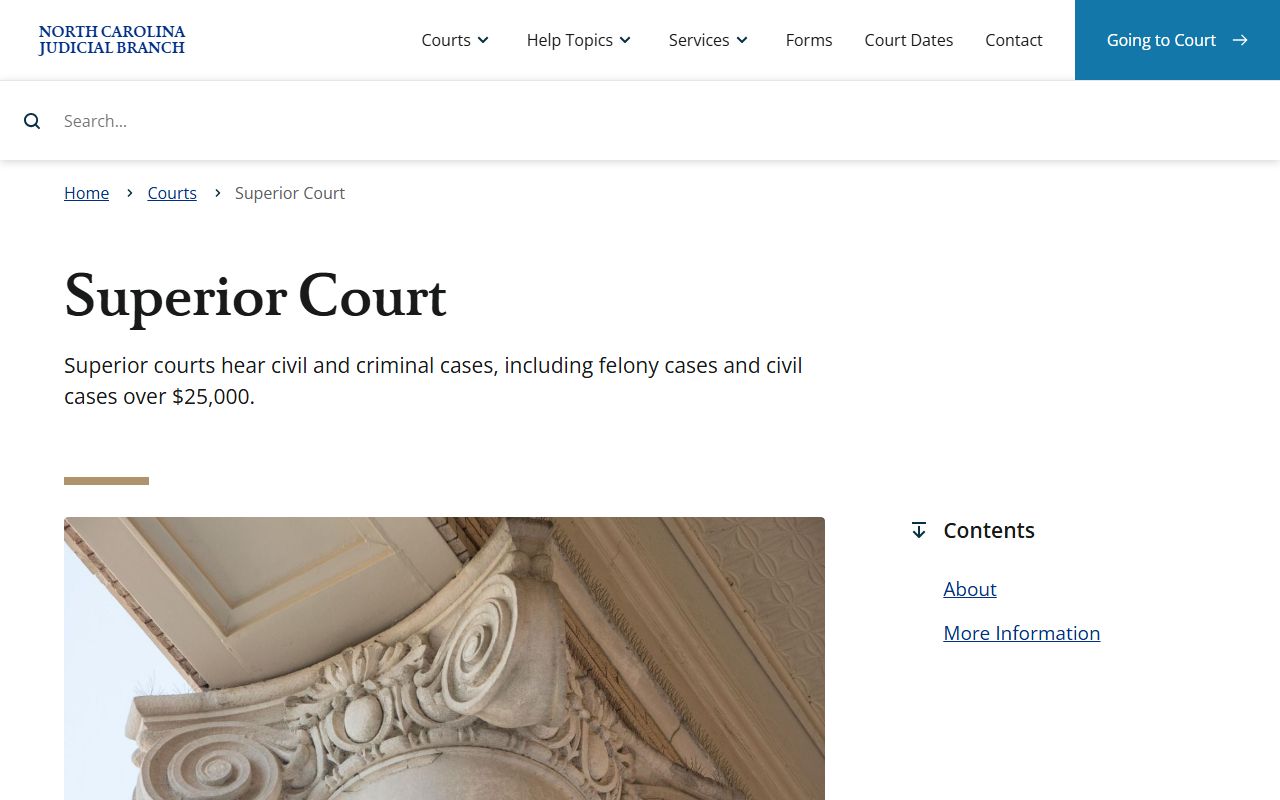
That Superior Court context matters in Person County because felony case records can move beyond the first appearance or preliminary District Court setting.
District Court Criminal Cases
Many Person County criminal court records begin in District Court. Misdemeanors and infractions are heard there, and magistrate matters sit within the District Court framework. A misdemeanor traffic conviction in District Court can be appealed for a new trial in Superior Court. This movement can create docket entries, appeal entries, new hearing dates, and updated status fields in the court record.
The North Carolina District Court page explains the court division that handles misdemeanors, infractions, juvenile matters, and magistrate matters.
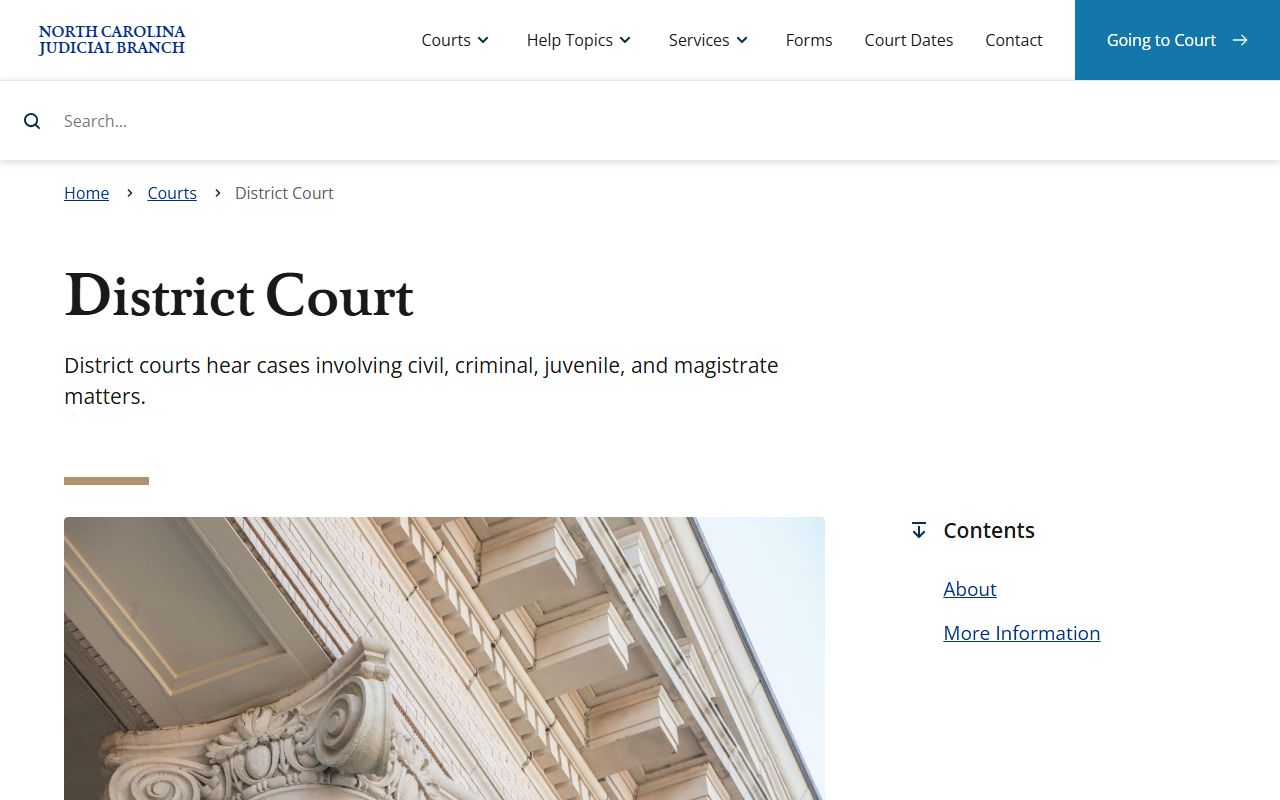
Use the court division shown in the case record to understand whether the matter is a misdemeanor, infraction, felony setting, appeal, or another criminal court event.
Search Person County Criminal Cases
Criminal case information is searched through the NC eCourts Portal, public self-service terminals in clerk offices, and paper file access through the Clerk of Superior Court. The Judicial Branch says criminal case information can be searched on public terminals by defendant name, case number, or victim or witness name. Portal results are not a full criminal background check, and the Judicial Branch says background checks should use the county clerk's office instead of relying on portal data.
- Open Smart Search in the eCourts Portal.
- Search by defendant name in Last, First Middle Suffix format, or use the case number.
- Set the location filter to Person County to avoid statewide matches.
- Open the case result and read the docket, charges, hearings, and disposition fields.
- Request certified copies or background-check help from the Person County Clerk of Superior Court when needed.
If custody status is the main question, the Person County inmate records page covers jail and state custody channels. If the concern is a possible active order for arrest, the Person County warrant records page covers court-process checks.
Criminal Case Stages
A Person County criminal court record grows as the case moves. Early entries may show arrest process, a citation, magistrate paperwork, bond, first appearance, and initial hearing dates. Later entries may show indictment, arraignment, motions, continuances, plea settings, trial events, dismissal, judgment, sentence, probation, payment obligations, and appeals. A single arrest can produce more than one charge, and each count may end differently.
Case flow: Charges Filed › First Appearance › Hearings and Motions › Plea or Trial › Disposition › Sentencing or Appeal
| Stage | What It Adds to the Record |
|---|---|
| Initial charge | Charge text, statute, offense class, arresting agency, warrant or process number, and first court date if public. |
| Pretrial settings | Continuances, release conditions, motions, attorney appearances, and hearing dates. |
| Plea or trial | Guilty plea, not guilty finding, dismissal, amended charge, verdict, or other disposition event. |
| Judgment | Sentence, probation, costs, fines, restitution, credit for time served, and appeal entries where public. |
What Criminal Records Show
Person County criminal court records can show the court location, case number, defendant name, filing or charge date, case type, status, charge list, offense statute, offense class, count number, arresting agency, hearings, docket entries, financial obligations, and redactions. Online public access may not show every document image. The paper file may include warrants, indictments, judgments, notices, and orders.
| Field | What It Shows |
|---|---|
| Case Number | The North Carolina court identifier for the criminal or infraction case. |
| Defendant | The person charged in the criminal matter. |
| Charges | Offense text, statute number, offense class, count number, and amended or reduced charge when updated. |
| Hearings | Date, time, hearing type, courtroom, judicial officer, and county when public. |
| Disposition | Dismissal, plea, finding, judgment, or other outcome for each charge. |
| Sentence | Probation, confinement, costs, fines, restitution, and other judgment terms where public. |
Public Criminal Record Law
North Carolina's Chapter 132 public-record law sets broad access rules for public records. For court files, the more specific court-record statute is G.S. 7A-109, which requires clerks to maintain records, dockets, indexes, and files and makes them open to public inspection except where the law prohibits access. Person County criminal records also remain subject to sealing, expunction, juvenile confidentiality, and redaction rules.
The North Carolina Chapter 132 index is the public-record statute index.
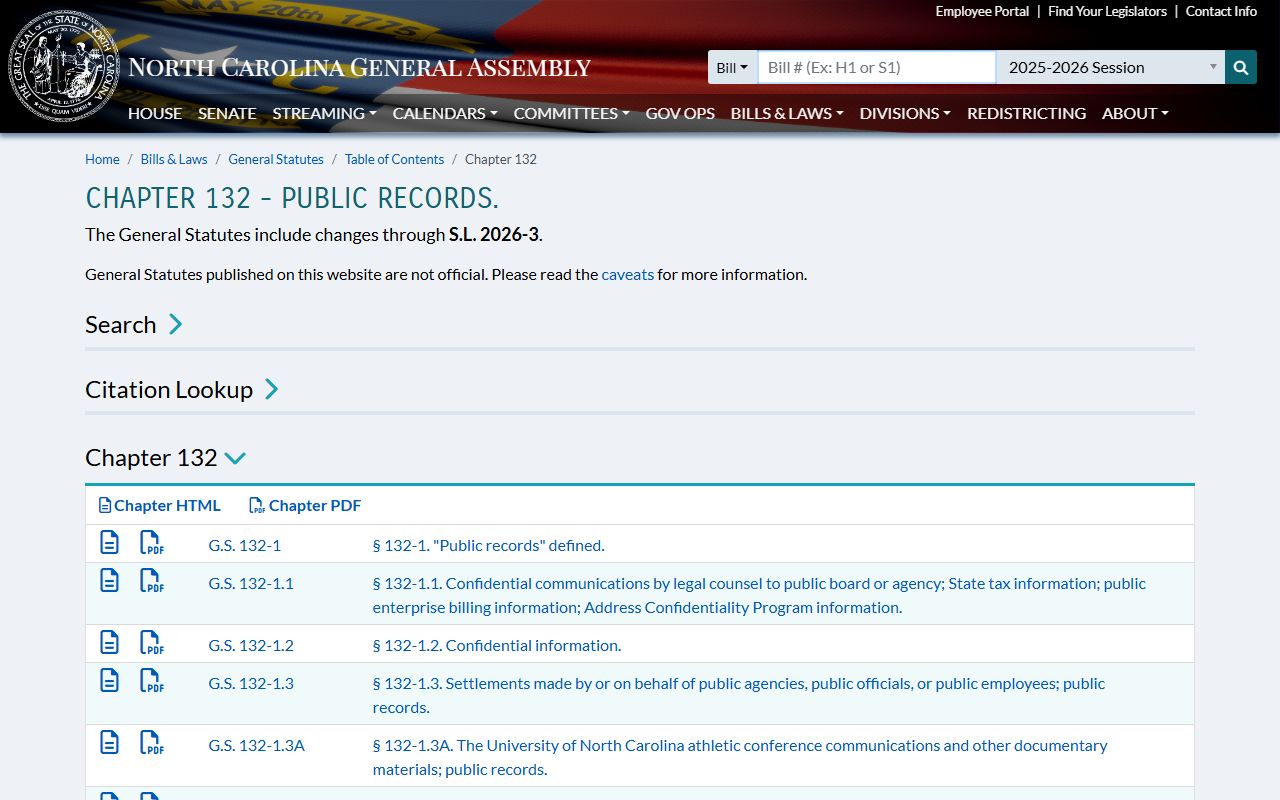
Chapter 132 explains public records broadly, while criminal case-file inspection also depends on court rules and case-specific restrictions.
G.S. 132-1 defines public records for North Carolina government agencies.
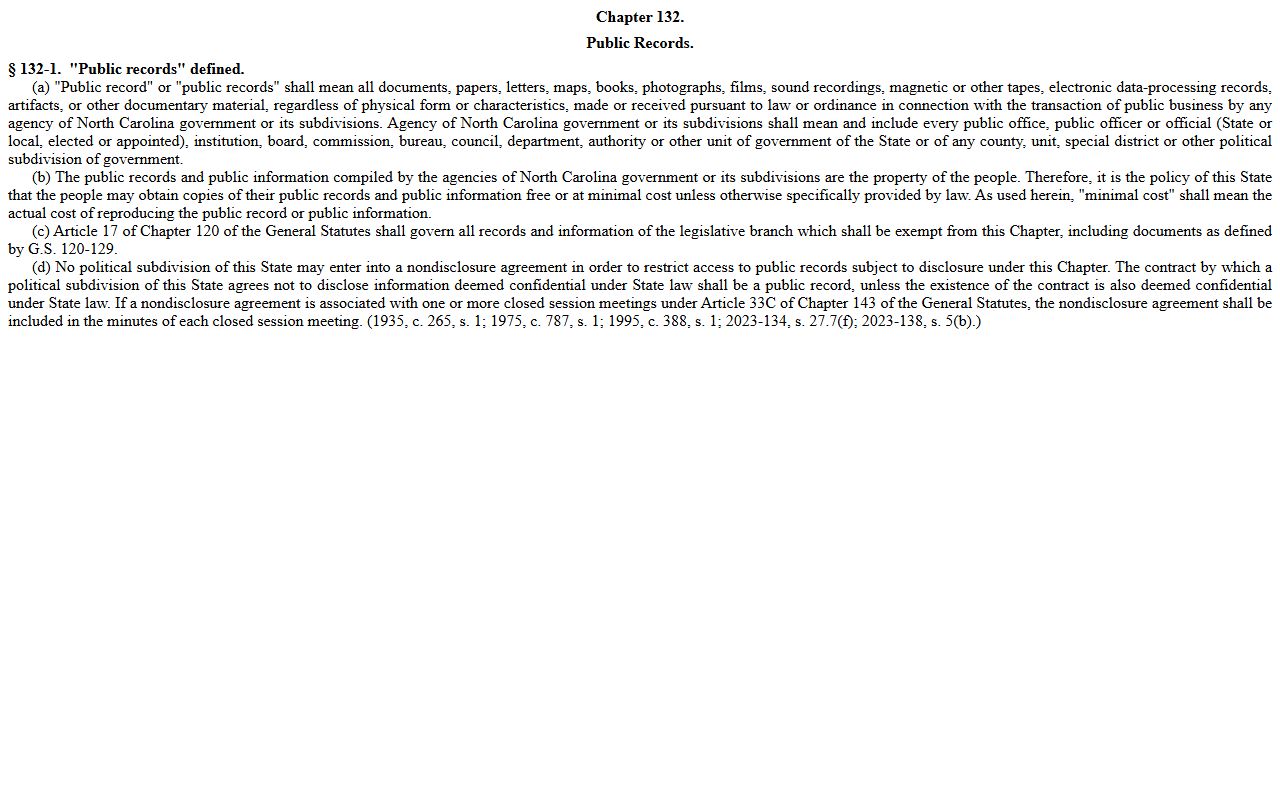
That definition supports public access, but it does not override juvenile confidentiality, sealed files, expunction orders, or protected identifiers.
Charges vs Convictions
A charge is an accusation. A conviction is a final result after a guilty plea, verdict, or other judgment that creates a conviction. A Person County criminal court record may show charges that were dismissed, reduced, amended, or resolved without conviction. Read each count separately, because one case can have multiple charges and mixed outcomes.
| Charge | Conviction | |
|---|---|---|
| Meaning | Formal accusation filed after arrest, citation, warrant, or other process | Final guilty result by plea, verdict, or judgment |
| Record use | Shows what was alleged and tracked in court | Shows the outcome used for sentencing and many legal consequences |
| Possible change | May be amended, reduced, dismissed, or superseded | May be appealed, set aside, or later subject to expunction if eligible |
Clerk Criminal File Duties
The Clerk of Superior Court is the custodian for Person County criminal court records. G.S. 7A-109 is important because it names the clerk's duty to keep court records, files, dockets, and indexes. It also provides the public-inspection rule for court records unless the law says access is barred. That rule is why a criminal case lookup can start online but still route to the clerk for file review and copies.
G.S. 7A-109 is the North Carolina court-record keeping statute.
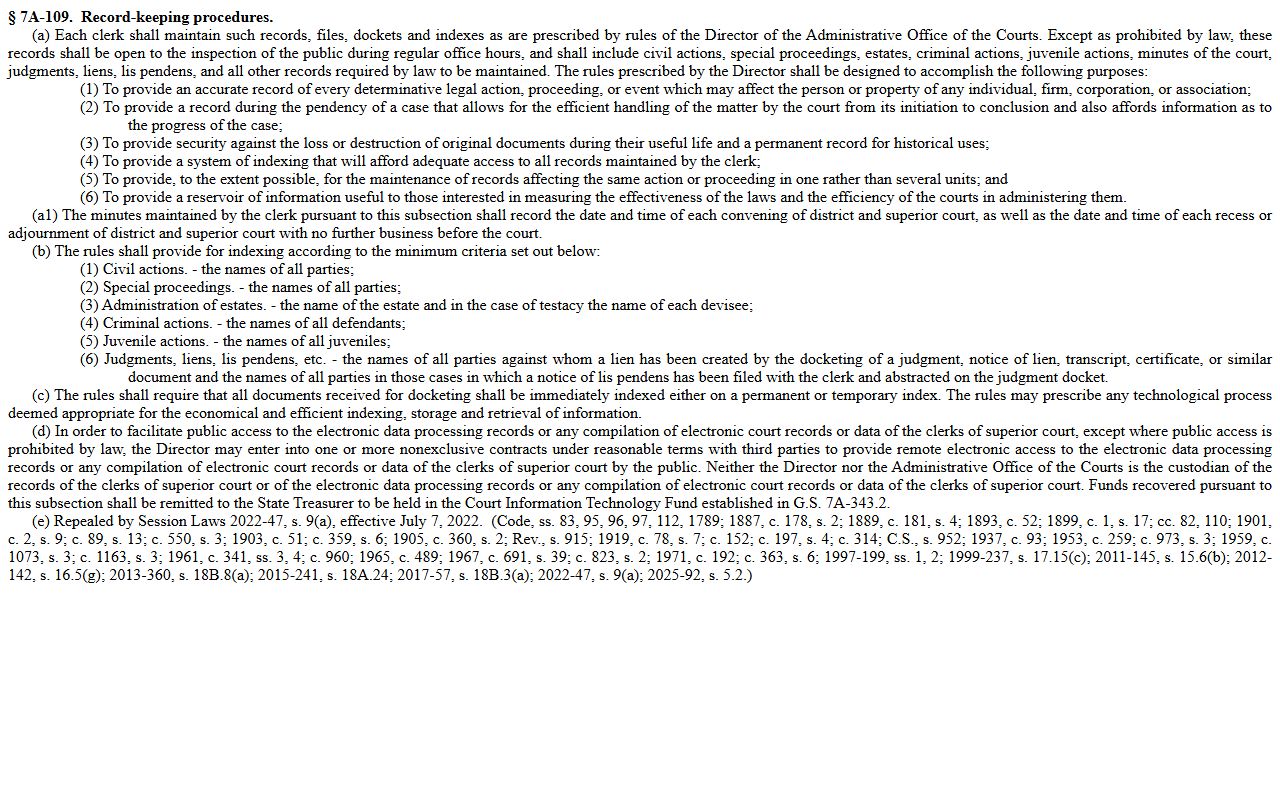
For Person County users, that statute backs the practical clerk path: search online, use terminal access, then request the paper case file or copy from the clerk.
Sealed and Expunged Records
Sealed and expunged Person County criminal records are not ordinary public records. A sealed record is hidden from routine public inspection by law or court order. An expunction limits public-facing access according to the expunction order and statute. North Carolina expunction is not automatic for every dismissed charge or conviction, and eligibility depends on the offense, outcome, waiting period, prior record, and statute used.
| Sealed | Expunged | |
|---|---|---|
| Public visibility | Restricted from ordinary inspection | Removed or restricted as directed by the order |
| How it happens | By statute or court order | By petition and court order under an expunction statute |
| Person County path | Ask the clerk what order or statute controls access | Identify the case, use the proper AOC form, and file through the clerk |
G.S. 15A-145.5 covers expunction for certain nonviolent misdemeanors and felonies.
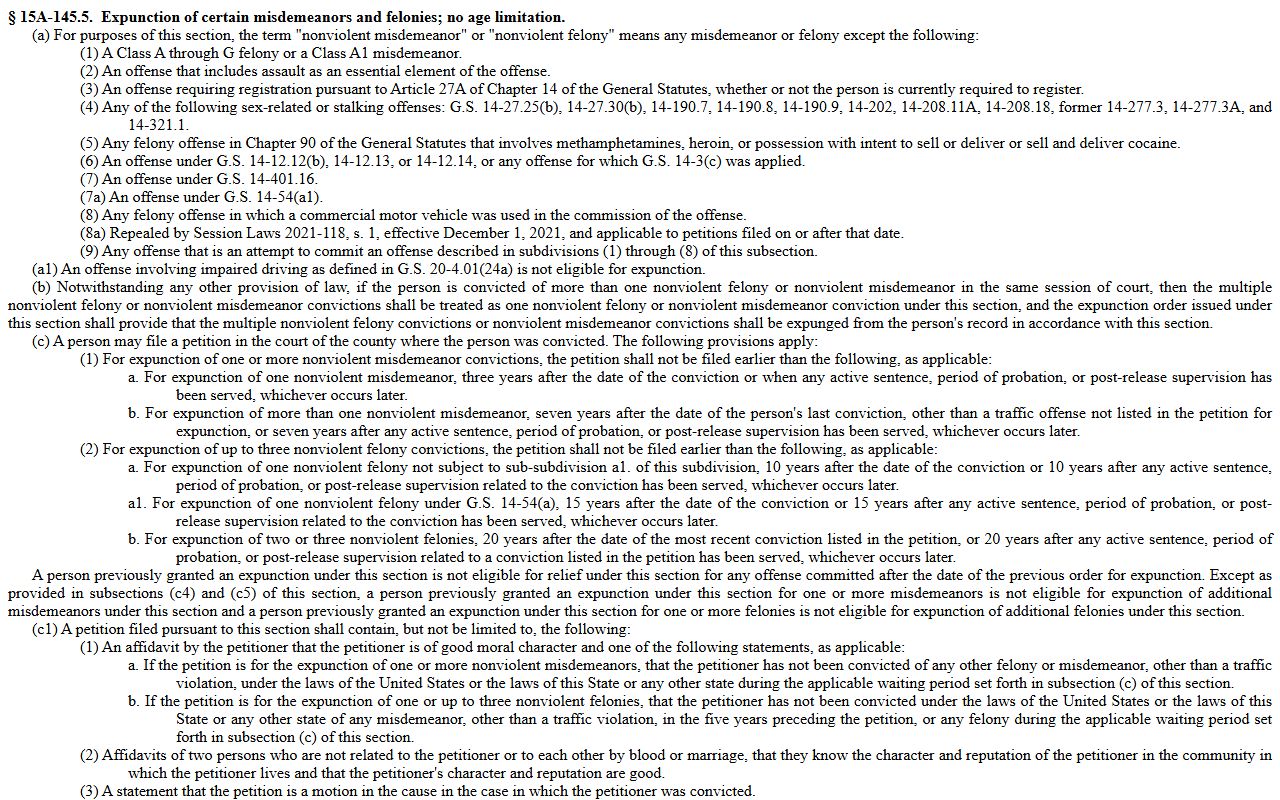
Because the research did not locate a Person-specific expunction fee or local processing time, current fee and filing details should be confirmed with the Clerk of Superior Court.
Restricted Criminal Records
Juvenile delinquency records are not searched like adult criminal court records. G.S. 7B-3000 makes juvenile court records confidential except by statute or court order. Other restricted categories include adoption records, mental health proceedings, sealed cases, expunged records, protected addresses, minor information, financial account details, and sensitive law-enforcement records. A public docket entry does not guarantee public access to every document.
Person County background checks should not rely on the portal alone. The Judicial Branch says background checks should use the county clerk's office. The Sheriff's FAQ also points local Person County criminal-history requests to the Clerk's Office and statewide criminal-history requests to the State Bureau of Investigation.
Important: Public lookup tools are not FCRA consumer reports and should not be used for regulated screening decisions.