
Person County Probate Court Structure
North Carolina does not use a separate probate court for Person County. Estates, guardianships, and many special proceedings are supervised by the Clerk of Superior Court. The practical office is the Estates Division of the Clerk of Superior Court at the Person County Courthouse. The Judicial Branch court-record help topic says civil, special proceeding, and estates case information can be accessed at public self-service terminals in clerk offices and online through Portal for case information.
A probate file may begin after death when an estate needs administration, when a will must be filed, or when a court-supervised representative must act for a decedent's property. Guardianship is related but not the same as a routine estate. In guardianship, the clerk decides whether an adult lacks enough capacity to manage personal affairs, property, or both, and then may appoint a guardian. The North Carolina Judicial Branch estates help topic is the statewide starting point for estate administration.
The estates help topic is one of the manifest sources assigned to Person County probate records.
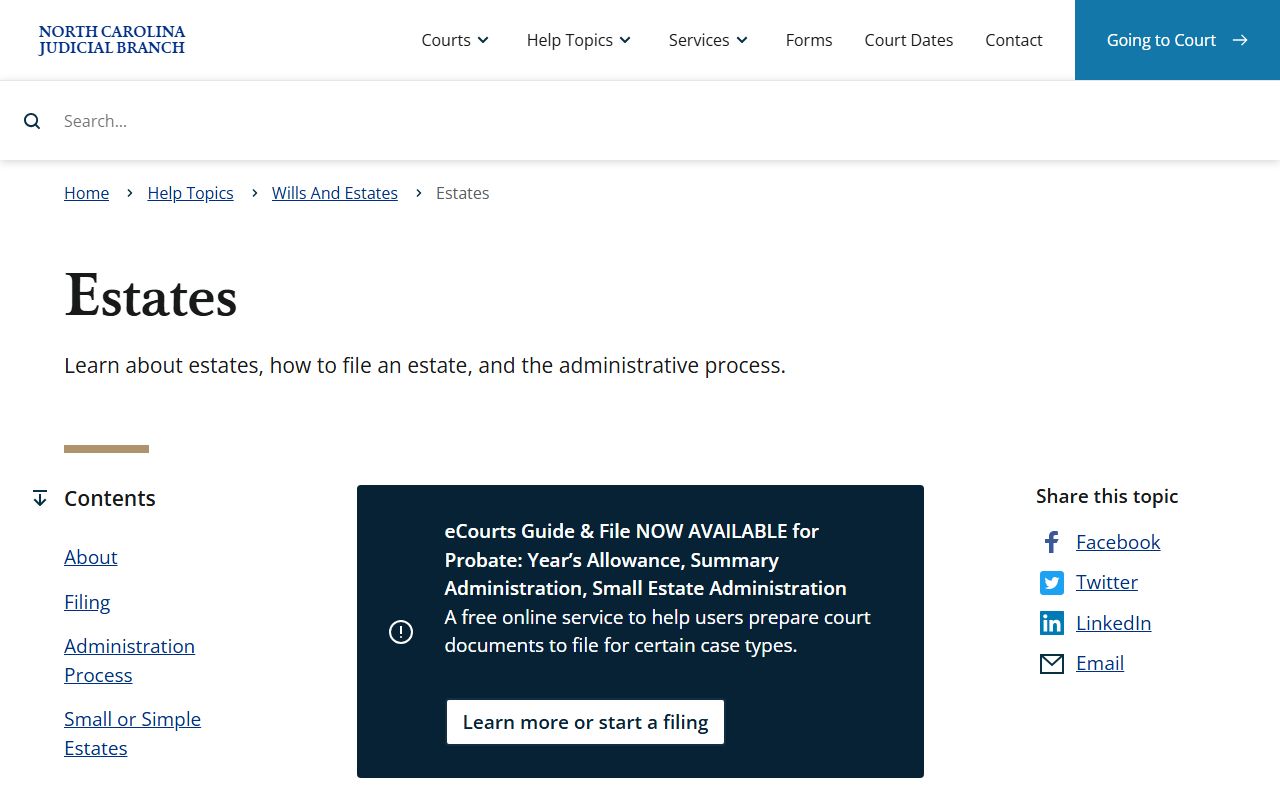
That statewide source supports the local point: Person County estate files are court-related clerk records, not Register of Deeds land or vital records.
Person County Probate Terms
Probate records use terms that can sound formal. The definitions below use plain language and follow the North Carolina clerk-supervised estates and guardianship framework reflected in the research.
- Testator
- The person who made a will before death.
- Executor
- The person named in a will to carry out estate duties if the clerk qualifies that person.
- Intestate
- Dying without a valid will, which can require administration under state succession rules.
- Guardian
- A person appointed by the clerk to make decisions or manage affairs for someone found legally incompetent.
- Conservatorship
- A term used in some states for property management; in North Carolina, guardianship language and clerk authority are the research-backed terms.
- Special proceeding
- A court file category often handled through the clerk, including certain estates, partitions, foreclosures, and related matters.
Search Person County Probate Records
There are several access channels for Person County probate records. Use the statewide NC eCourts Portal for public case information, use Search Hearings for estate or guardianship hearing dates, use a public terminal at a clerk's office for civil, special proceeding, and estates information, and visit the Person County Clerk of Superior Court for the paper file or copies. If the request is for Judicial Branch administrative records rather than an estate case file, the Judicial Branch public-record request process is the better route.
- Start with the party name, estate name, case number, or file date if known.
- Search Smart Search in the eCourts Portal and narrow the location to Person County.
- For hearing dates, use Search Hearings and select Person County with the hearing type "Probate or Mental Health."
- If the online result is not enough, use a public terminal in a clerk's office for civil, estate, and special proceeding case information.
- For document copies, contact or visit the Person County Clerk of Superior Court at the courthouse.
- For adult guardianship form preparation, review North Carolina Guide & File if the case type fits.
Note: Online case information is not the same as the full estate file, and paper-file review remains a clerk-office channel.
Person County Estates Division Contact
The relevant probate office is the Clerk of Superior Court, not a county probate judge's office. The courthouse is also where Person County Superior Court, District Court, criminal and civil divisions, magistrates, and other court contacts are tied together through the Judicial Branch contact directory.
Estates Division of the Clerk of Superior Court
Person County Courthouse
105 S Main St
Roxboro, NC 27573
(336) 503-5200
Monday-Friday, 8:30 AM-5:00 PM
Civil Division
Person County Courthouse
105 S Main St
Roxboro, NC 27573
(336) 503-5201
Civil, special proceeding, and related clerk-file questions
Person County Probate Copy Fees
The official Person County research did not locate a Person-specific estate filing fee table, small-estate threshold, will-safekeeping fee, or local probate calendar schedule. The safe copy rule is narrower: the Judicial Branch says clerk staff can provide copies of documents in court files for a fee. Use the clerk for current estate filing and copy costs before submitting a petition or mailing payment.
| Item | Amount or Rule |
|---|---|
| Estate filing fees | Confirm with the Clerk of Superior Court or current AOC fee schedule |
| Guardianship filing fees | Confirm with the Clerk of Superior Court or current AOC fee schedule |
| Copies from an estate file | Fee applies; exact Person amount not located in official research |
| Certified copies | Request from the clerk and confirm certification cost before payment |
| Judicial Branch administrative public records | Use Judicial Branch public-record request for non-case administrative records |
What Person County Probate Records Show
Estate and probate records can show who filed the case, whether a will exists, the decedent's name, the proposed personal representative, orders or letters issued by the clerk, notices to creditors, inventories, accountings, receipts, distributions, and closing documents. Guardianship files can show the petitioner, respondent, requested guardian, hearings, clerk orders, and later reports or accountings when property management is involved.
The North Carolina Judicial Branch guardianship help topic is another assigned probate source.
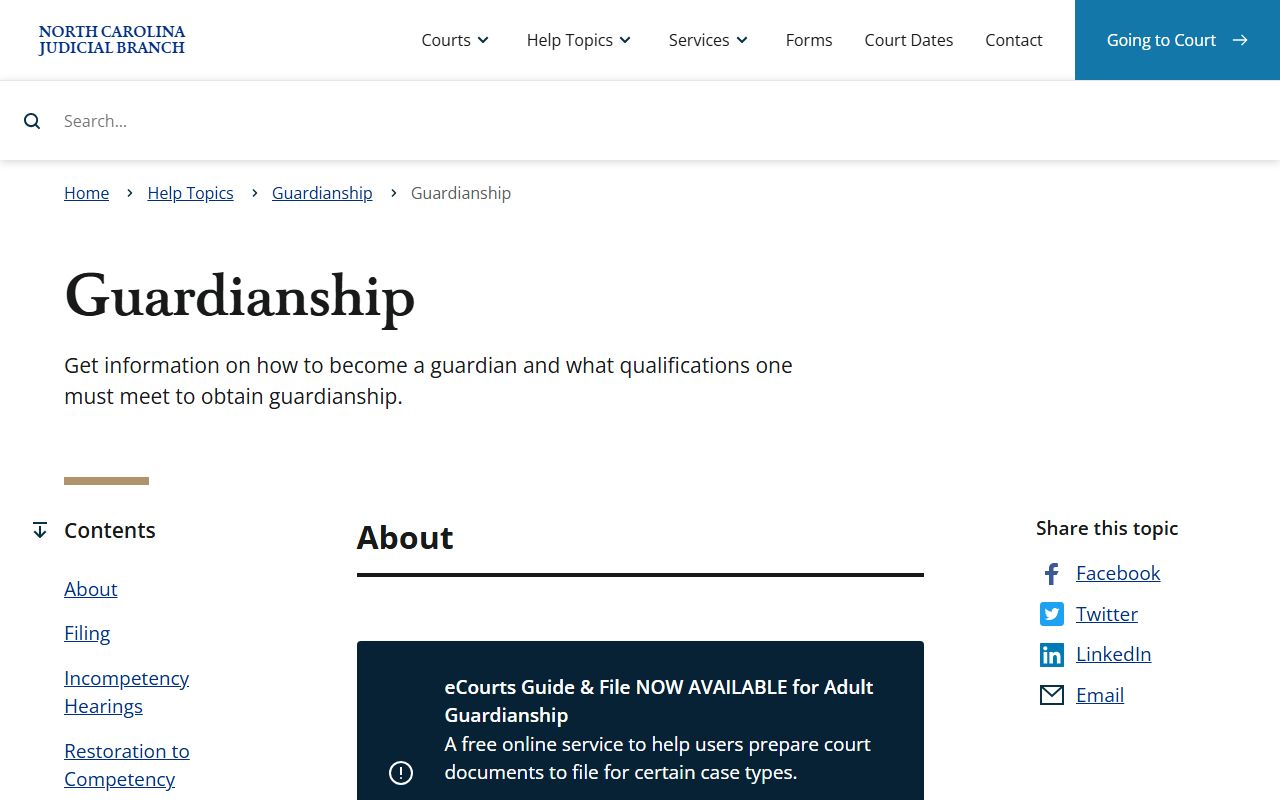
That source explains why guardianship records can differ from ordinary estate files: the clerk is deciding capacity and authority to act for another person, which can involve sensitive medical, personal, and financial facts.
Portal information may show case type, location, filing date, status, parties, hearings, and docket events. It may not show all scanned documents. For wills, original papers, inventories, accountings, or certified orders, the research points back to the paper file and the Person County clerk's office.
Restricted Person County Probate Records
Some estate records are public, but probate-adjacent records are not all open in the same way. Mental health matters can be confidential by law even though the Portal hearing search includes "Probate or Mental Health" as a hearing type. Guardianship files can contain medical, financial, and capacity evidence. Sealed filings, protected addresses, financial account numbers, Social Security numbers, and minor information may be withheld or redacted.
North Carolina's juvenile confidentiality statute is relevant where a probate or guardianship question intersects with minor records. The manifest image below comes from G.S. 7B-3000, which the research identifies as the juvenile court-record confidentiality statute.
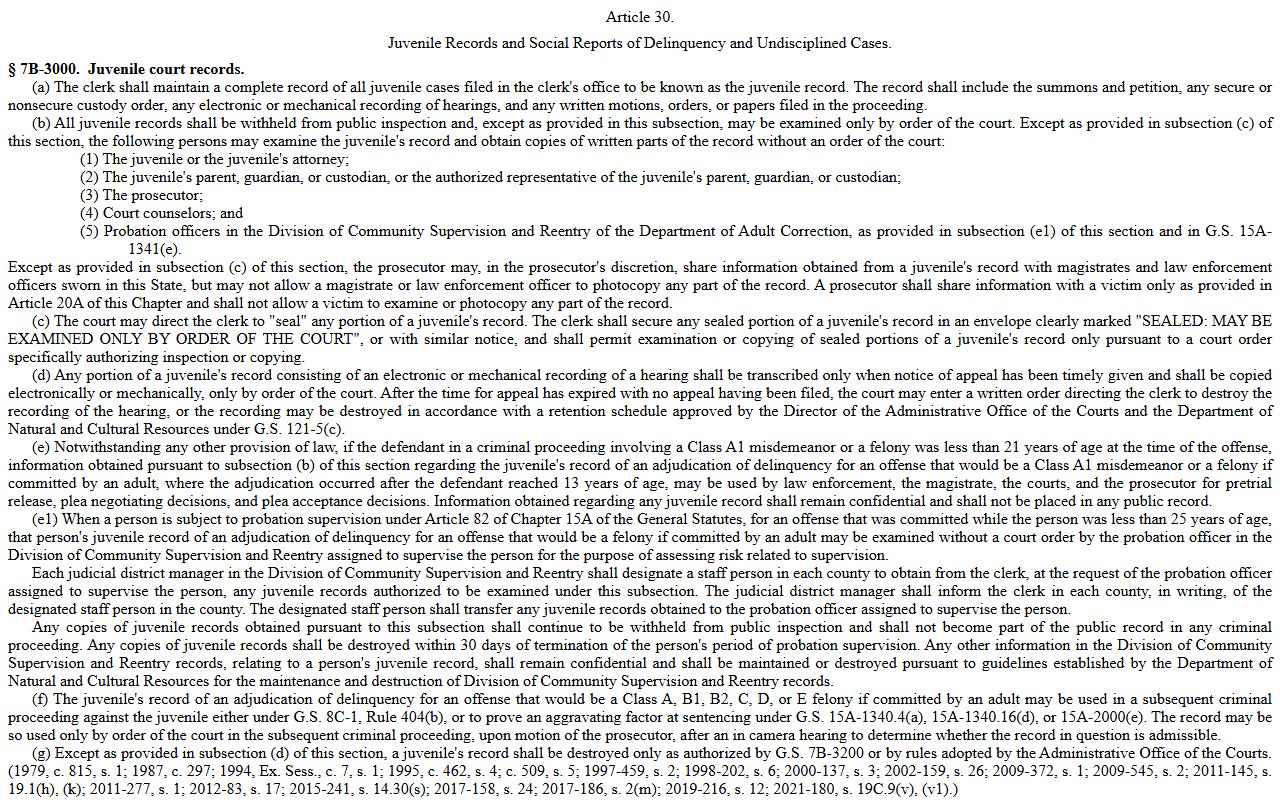
For Person County probate records, that statute is a reminder not to treat juvenile, DSS, adoption, or minor-related court material like ordinary public estate paperwork.
A public terminal or Portal entry can confirm that a file exists, but the Clerk of Superior Court controls access to the official file under North Carolina court-record rules. When a request touches a sealed matter, guardianship capacity evidence, mental health proceeding, or juvenile record, expect the clerk to apply state restrictions before allowing inspection or copies.